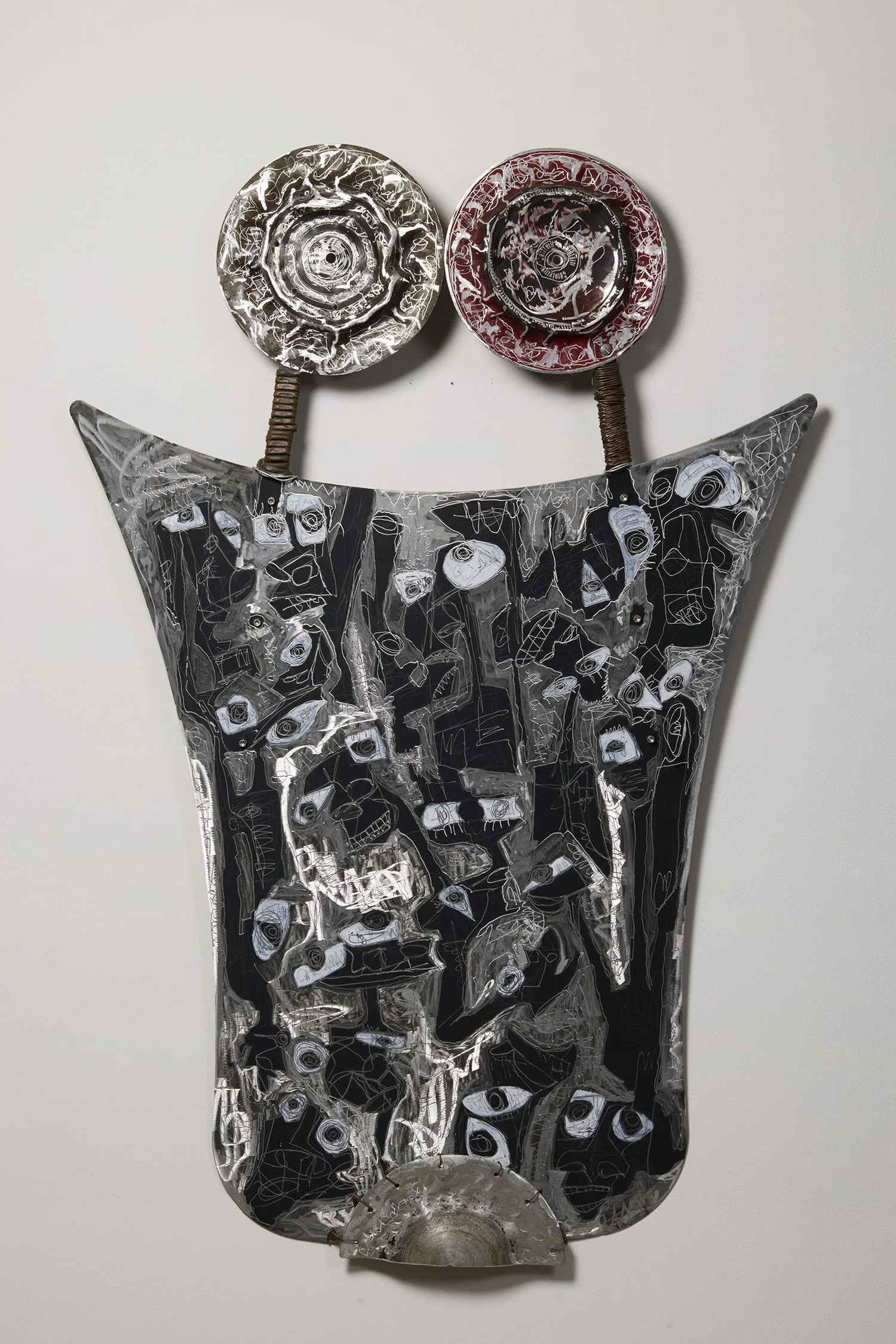
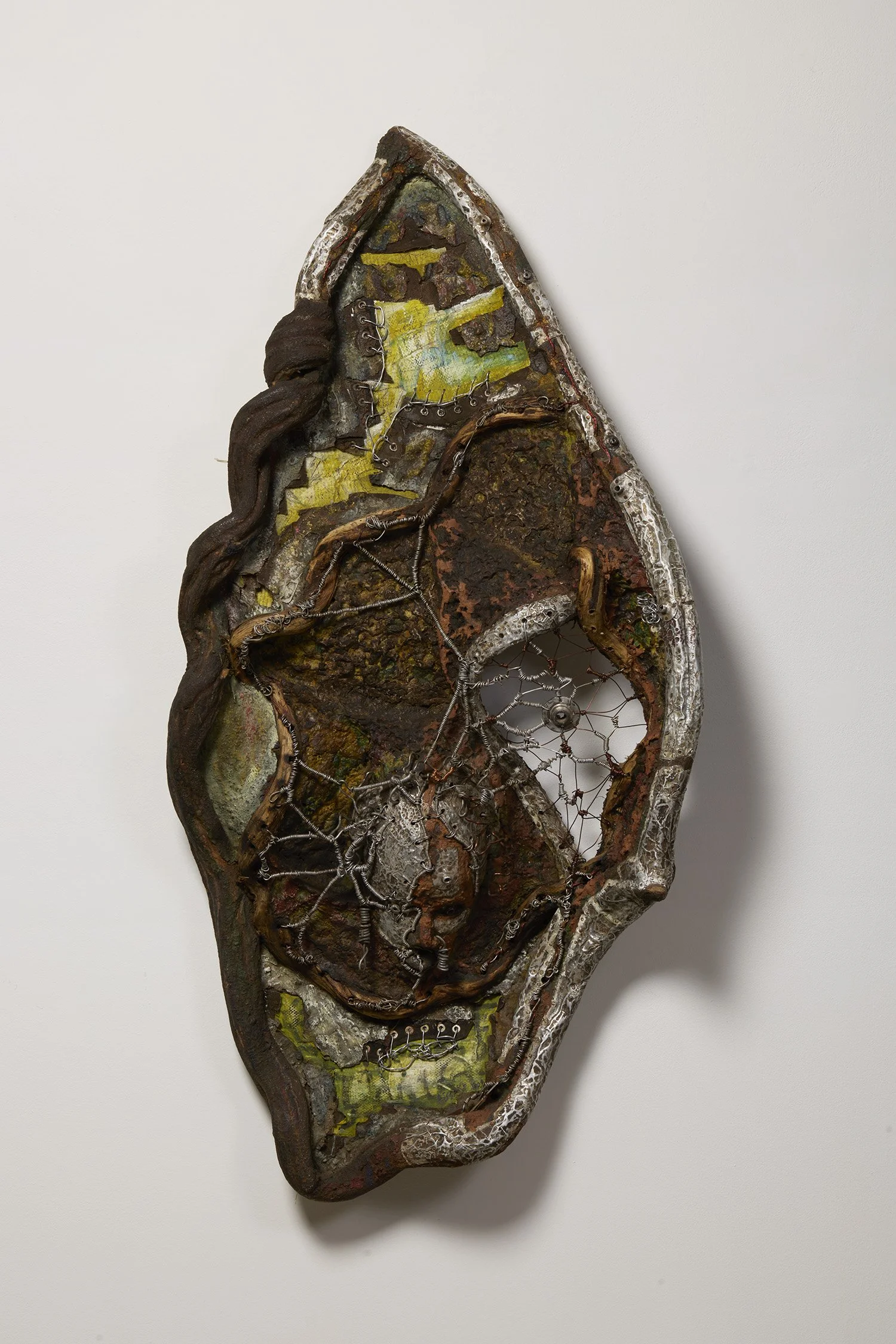
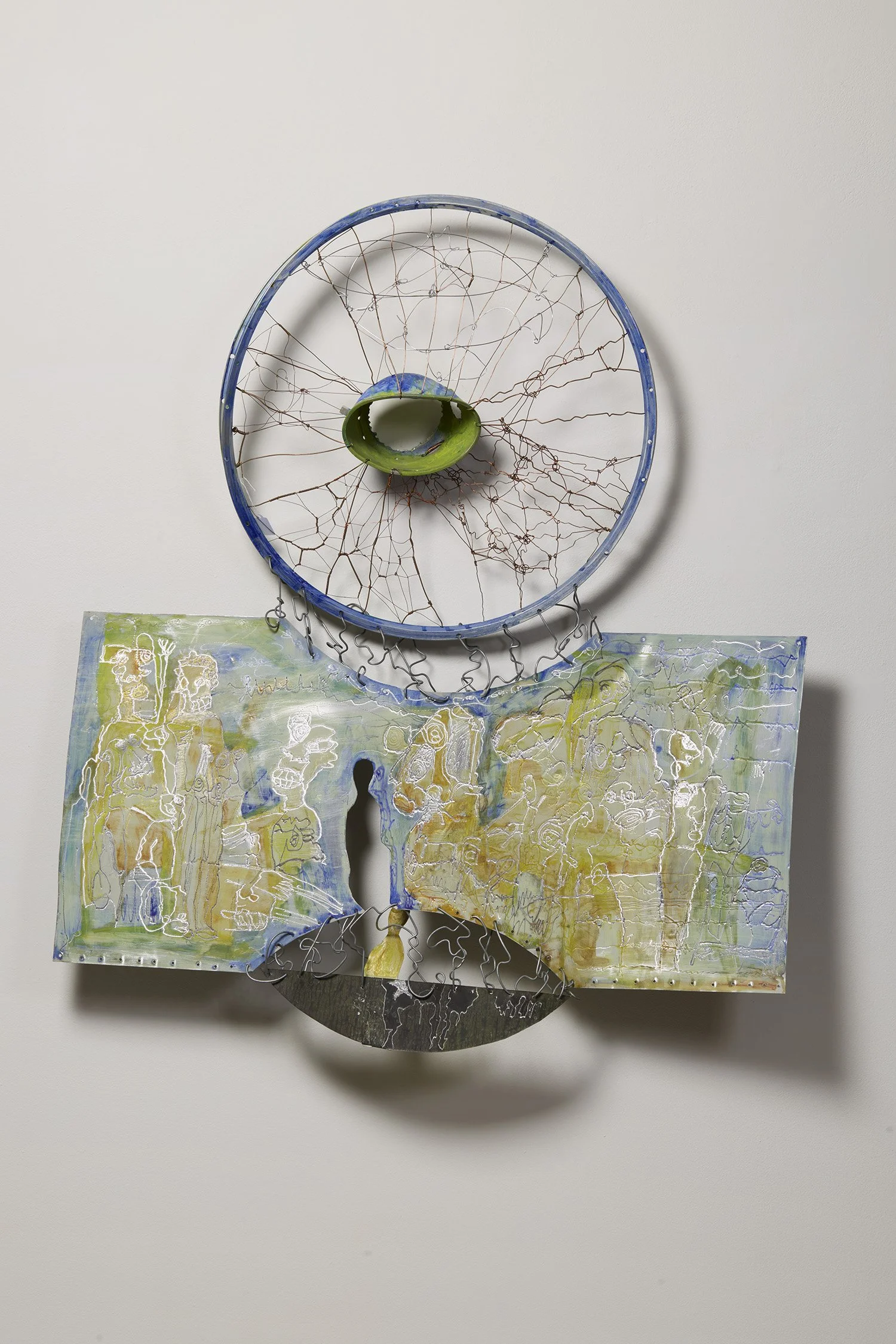
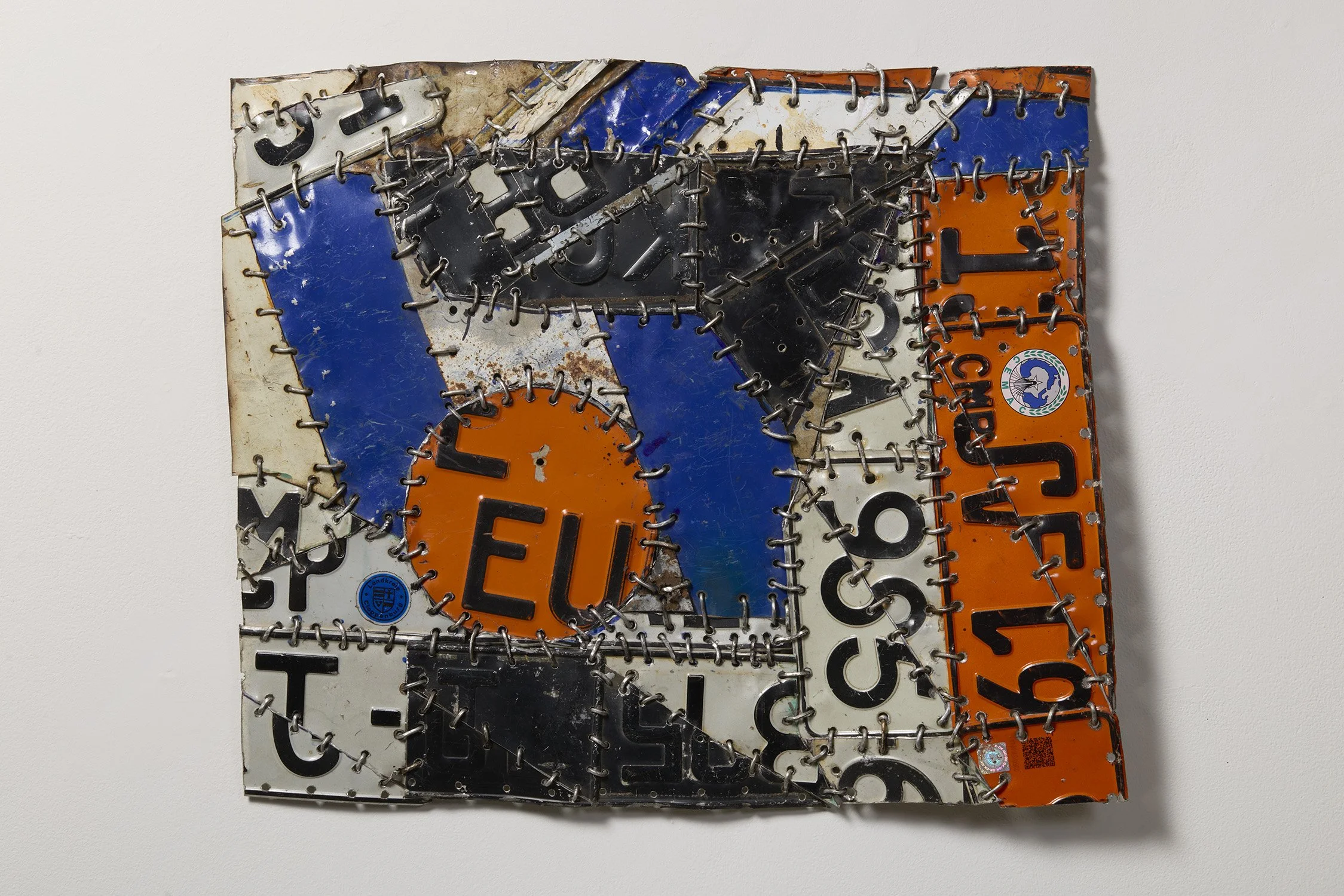
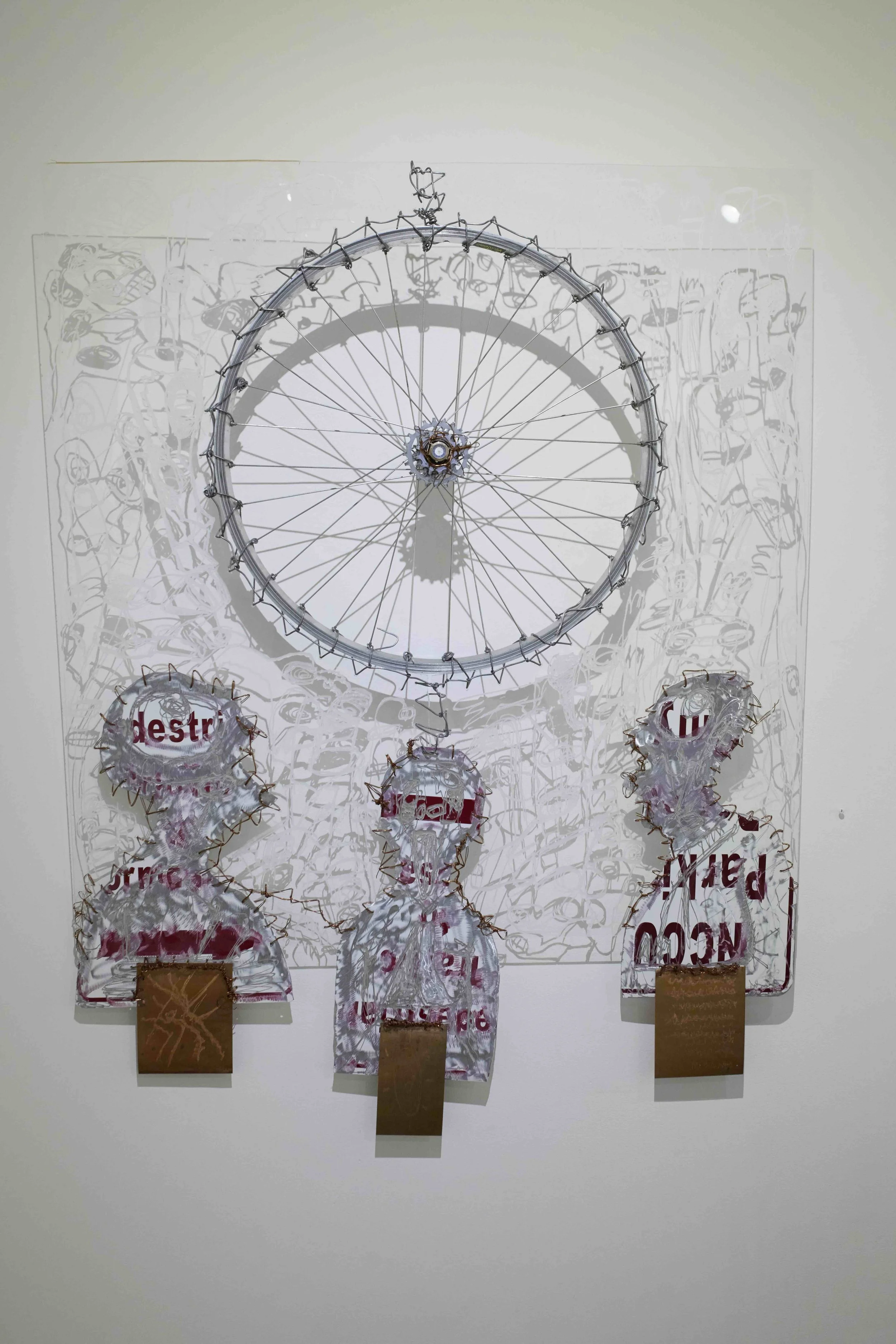
Cameroonian artist Jean Michel Dissake’s sculptural works use found and recycled materials to represent a balance between nature and technology by weaving natural objects such as wood, vines, termite dust, water hyacinths, and palm fronds together with computer boards, aluminum wire, license plates, and car parts. Informed by his cultural heritage as well as wisdom gained from living for nine years in the forest on the Mungo River, Dissake’s work invokes a dialogue on ecological and spiritual matters and speaks to timely issues of unity, peace, love, and oneness with nature.
Babenga refers both to the village where Dissake’s grandfather was the local king for over fifty years as well as the idea of the continuity of humans – a ceremonial invocation of a future land and new spirituality where humans and nature thrive. Dissake’s understanding and deep respect for the natural world imbue the works with symbolism that serves as a wakeup call to realize our connection with nature. Babenga is also the title of his solo exhibition at the Gregg Museum of Art and Design, NC State University, Raleigh, NC, organized by Mariott Sheldon and Roger Manley.
Born in 1983 in Yaoundé, Cameroon, where he lives and works, Dissake earned a degree in Economics from the University of Douala. But shortly after graduating, his life took a radical change of direction when he decided to dedicate all his time and energy to following his true calling as an artist.